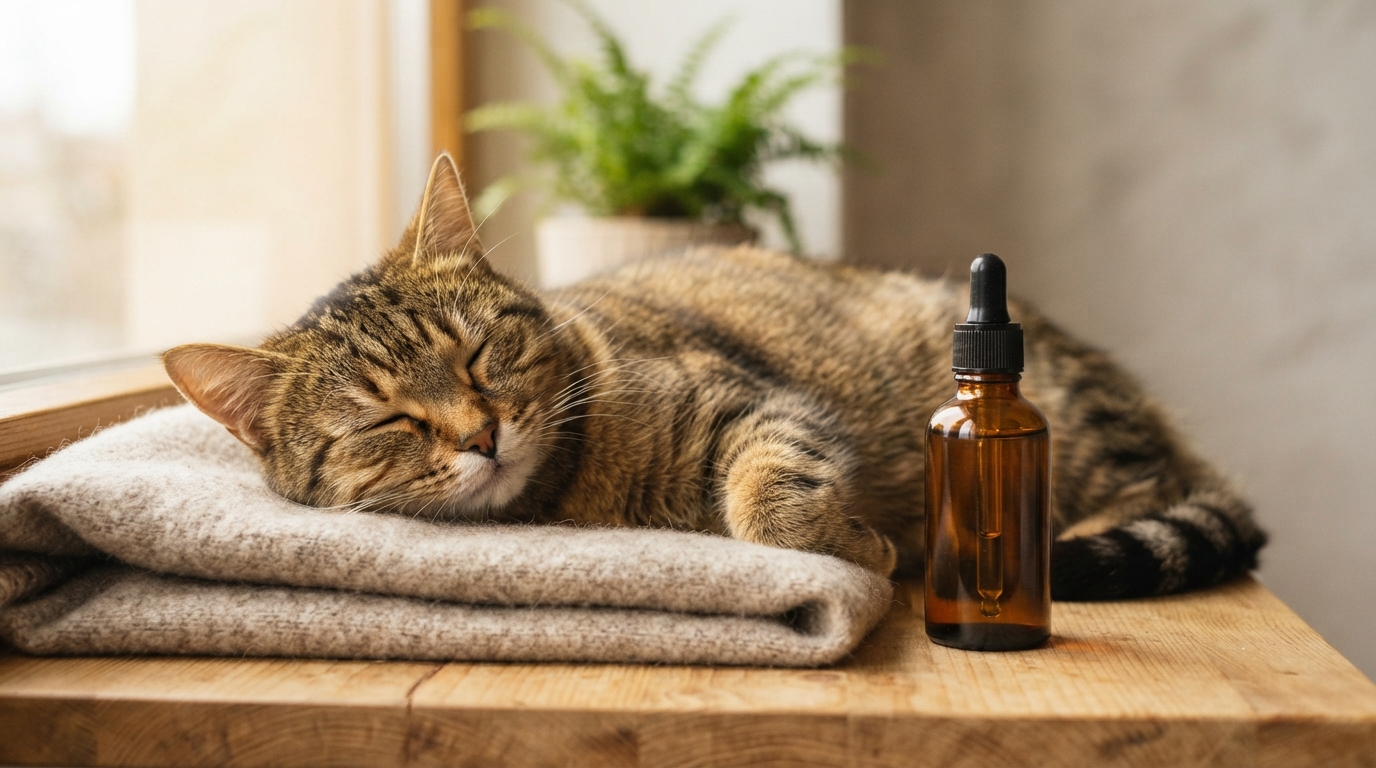
Feline health decisions often require more care than they first appear to. Cats can be selective about food, sensitive to unfamiliar substances, and skilled at hiding signs of discomfort. As interest in pet supplements continues, Holistapet CBD Oil for Cats has become a common subject among owners searching for information about relaxation, mobility, discomfort, and general wellness. The safest way to approach the topic is to separate established veterinary information from product claims and to consider the individual cat rather than relying on a standard formula.
CBD Basics for Cat Owners
Cannabidiol, commonly shortened to CBD, is a cannabinoid naturally found in cannabis and hemp plants. It is different from tetrahydrocannabinol, or THC, which is responsible for the intoxicating effects associated with marijuana.
The difference between these compounds is important when evaluating feline products. A bottle labeled as hemp-derived does not automatically provide enough information about its cannabinoid profile. Some formulations can contain several cannabinoids, while others may include additional botanical ingredients.
CBD has been investigated for possible effects involving the nervous system, inflammation, pain, and other biological processes. Research involving cats is still developing, so many claims found in consumer marketing extend beyond what clinical evidence can establish.
Why cat-specific evidence matters
A cat is not a small human, and feline research cannot simply be replaced with studies from another species. Cats have distinctive metabolic characteristics that influence how substances are absorbed and processed.
Studies involving dogs can provide useful information for researchers, but canine results should not be converted directly into feline dosing instructions. The same principle applies to human studies.
For an owner, this means that a precise-looking number from an online calculator may still lack enough scientific support to be considered a reliable feline dose.
Look for the Reason Behind the Supplement
A supplement should have a clear purpose. If a cat has started hiding, limping, eating less, or avoiding normal activities, the first step is identifying why the change occurred.
For example, a cat that stops jumping may have joint discomfort. Another may avoid movement because of an injury. A cat that hides more often may be experiencing pain, stress, or illness.
Changes worth recording
A short daily record can include:
- Appetite
- Water consumption
- Activity
- Jumping and climbing
- Grooming
- Sleep
- Litter-box habits
- Body weight
- Vomiting or diarrhea
- Unusual vocalization
Written observations can be more useful than trying to remember when a veterinary appointment arrives. Patterns may reveal whether a change is occasional or persistent.
Cats with sudden appetite loss, severe weakness, difficulty breathing, repeated vomiting, seizures, or major behavioral changes require professional assessment rather than home experimentation with a supplement.
How to Examine a Product
The label should provide enough information to understand what is being purchased. The total CBD amount is useful, but the concentration per milliliter is often more important when considering measurements.
Suppose one bottle contains 400 milligrams of CBD in 40 milliliters of oil. Its concentration is 10 milligrams per milliliter. Another bottle could contain the same 400 milligrams in 80 milliliters, producing a concentration of 5 milligrams per milliliter.
The total cannabinoid amount is identical, but the concentration is not.
A useful product checklist
Before using any feline cannabinoid product, check whether the packaging provides:
- CBD amount per milliliter
- Total CBD content
- Total liquid volume
- THC information
- Complete ingredient list
- Batch number
- Expiration date
- Intended animal species
- Laboratory testing information
Unclear labeling creates unnecessary uncertainty. If the concentration cannot be established, the amount delivered through a measured volume becomes difficult to determine.
Third-party laboratory testing can provide additional information about cannabinoid concentrations and contaminants. The report is most useful when it identifies the same product and batch being considered.
Ingredient Selection Matters
CBD is only one component of an oil. Other ingredients may affect whether a product is suitable for cats.
Human products may contain flavorings, essential oils, sweeteners, or botanical extracts that are not appropriate for feline use. A product designed for another species may also have different formulation requirements.
Be cautious with essential oils
Cats have distinctive metabolic pathways for certain plant compounds. Concentrated essential oils can create health concerns, particularly when ingested.
A product should therefore be evaluated by its complete ingredient list rather than the amount of CBD alone.
This is also why “natural” should not be treated as a synonym for “safe.” Many naturally occurring substances can be harmful to animals at certain concentrations.
Understanding THC Exposure
THC deserves separate attention because cats can develop signs of toxicity after exposure to marijuana or THC-containing products.
Possible signs include unusual sleepiness, poor coordination, drooling, vomiting, urinary leakage, changes in pupil size, tremors, and altered body temperature. Severe cases can involve seizures.
Accidental exposure is especially concerning when human cannabis products are kept in accessible areas.
Practical storage rules
Store cannabinoid products:
- Inside a closed container
- Away from countertops that cats can access
- Separate from pet treats
- Away from human medications
- Out of reach of children and animals
- In the original labeled packaging
A cat that punctures a bottle, licks an open container, or consumes an edible product may receive an unknown amount. If exposure occurs, the packaging can help a veterinarian identify what was consumed.
Why Weight Alone Does Not Determine Dose
Body weight is an important measurement in veterinary medicine, but it does not provide a complete CBD dosing system.
Age, health status, medication use, product concentration, and the reason for administration can all affect the decision. A cat with kidney disease, for instance, may require a different assessment from a healthy adult cat.
Online dosing charts can also confuse total product volume with cannabinoid concentration. These are different measurements.
Consider the concentration
A 5-milligram-per-milliliter product and a 20-milligram-per-milliliter product deliver very different amounts when the same volume is administered.
Dropper measurements can introduce another variable because different droppers may release different volumes. A clearly marked measurement device can be more consistent when a veterinarian has already determined an appropriate amount for a specific product.
There is no universal feline CBD dose that can safely be applied to every cat.
Medication Interactions Need Review
CBD may affect enzymes involved in drug metabolism. The significance of this effect depends on the medication and the animal receiving it.
A veterinarian should know about prescription drugs, supplements, vitamins, and other treatments before a cannabinoid product is introduced.
This is particularly important for cats receiving long-term medication for neurological, cardiovascular, thyroid, kidney, liver, or inflammatory conditions.
Prepare information for the veterinarian
Useful information includes:
- Product name
- CBD concentration
- Full ingredient list
- Proposed amount
- Current medications
- Existing medical conditions
- Reason for considering CBD
- Any previous reaction to supplements
Having these details available makes the discussion more specific.
Monitoring After Administration
If a veterinarian approves a particular product, monitoring can help identify changes. Record the time administered and observe appetite, alertness, movement, stool, and general behavior.
Avoid making several changes at once. If a new diet, supplement, medication, and environmental change occur on the same day, determining which factor caused a reaction becomes difficult.
Concerning signs should receive professional attention. Excessive sedation, severe weakness, poor coordination, tremors, repeated vomiting, or suspected THC exposure should not be ignored.
What the Evidence Actually Says
Scientific interest in CBD and companion animals has increased, but evidence involving cats remains limited compared with the number of products marketed to pet owners.
Research can identify potential biological effects without proving that a commercial product treats a particular feline condition. Study results also depend on formulation, concentration, route of administration, and animal characteristics.
In the United States, cannabis products have not been approved by the FDA as veterinary treatments for animals. This distinction matters when evaluating advertisements that describe CBD as a treatment or cure.
A cautious owner can still learn from emerging research while recognizing where the evidence ends.
Final Thoughts
CBD products remain an evolving area of feline health research, and careful evaluation is necessary before adding one to a cat’s routine. Product concentration, ingredients, THC exposure, existing medications, and veterinary guidance should all be considered before use.
